

This means how dental clinics and labs manage their cases is more important than ever. With greater customization comes increased case complexity, and well-structured digital case management makes a difference. It’s crucial for ensuring efficiency and accuracy.
This guide explores how dentists and labs can effectively leverage digital case management to thrive in a changing market.
The ideal case management system is interoperable and cloud-based.
This case management system should facilitate clear and standardized communication protocols, which helps prevent errors and misinterpretation. Digital templates and checklists ensure consistency and completeness in every case submission, including patient history, design specifications, and material preferences.
READ MORE: Better Communication, Better Outcomes: A Look at Lab-Dentist Collaboration
Additionally, built-in messaging and annotation tools enable quick clarifications. The dental workflow solution EviSmart, for instance, has a mobile app with a 3D case viewer and in-app messaging, so dentists can give feedback on designs through screenshots and drawing on the models.
More management platforms are integrating AI into their features, like flagging incomplete prescriptions or suggesting design adjustments based on past successful cases. Repetitive tasks like file conversion and patient appointment or design approval reminders can also be automated so skilled workers in your team can focus on high-value tasks.
Despite the advantages, some dental professionals hesitate to adopt digital case management due to concerns about change, technical issues, and data security. Here’s how to address these challenges effectively:
1️⃣ Resistance to change
Some staff members may be hesitant to switch from familiar workflows to digital platforms. To ease this transition, leadership can communicate the long-term benefits clearly, provide hands-on training, and encourage team feedback.
Gradual implementation and showcasing early wins can also help build confidence and increase adoption rates.
2️⃣ Data security
Protecting patient data is a top priority. Ensure that your digital case management platform complies with industry standards such as HIPAA if you’re in the US or GDPR if in Europe. Implement strong encryption, multi-factor authentication, and regular data backups to safeguard sensitive information.
3️⃣ Cost concerns
While these platforms often require an upfront investment, long-term savings from reduced remakes and improved efficiency justify the investment. Many platforms also offer scalable pricing models to accommodate different business sizes and budgets.
Digital case management, when used to its fullest potential, presents a valuable opportunity for dental professionals to enhance efficiency, improve accuracy, and deliver better patient outcomes. By carefully selecting the right platform, standardizing workflows, training teams effectively, and leveraging AI and automation, practices and labs can optimize their operations and stay competitive in an evolving industry.
Now is the time to take a proactive approach. Evaluate your current case management processes, identify areas for improvement, and implement digital solutions that align with your needs. With the right strategies in place, digital case management can become a powerful tool for providing high-quality, customized dental care while ensuring streamlined, collaborative workflows between clinics and labs.
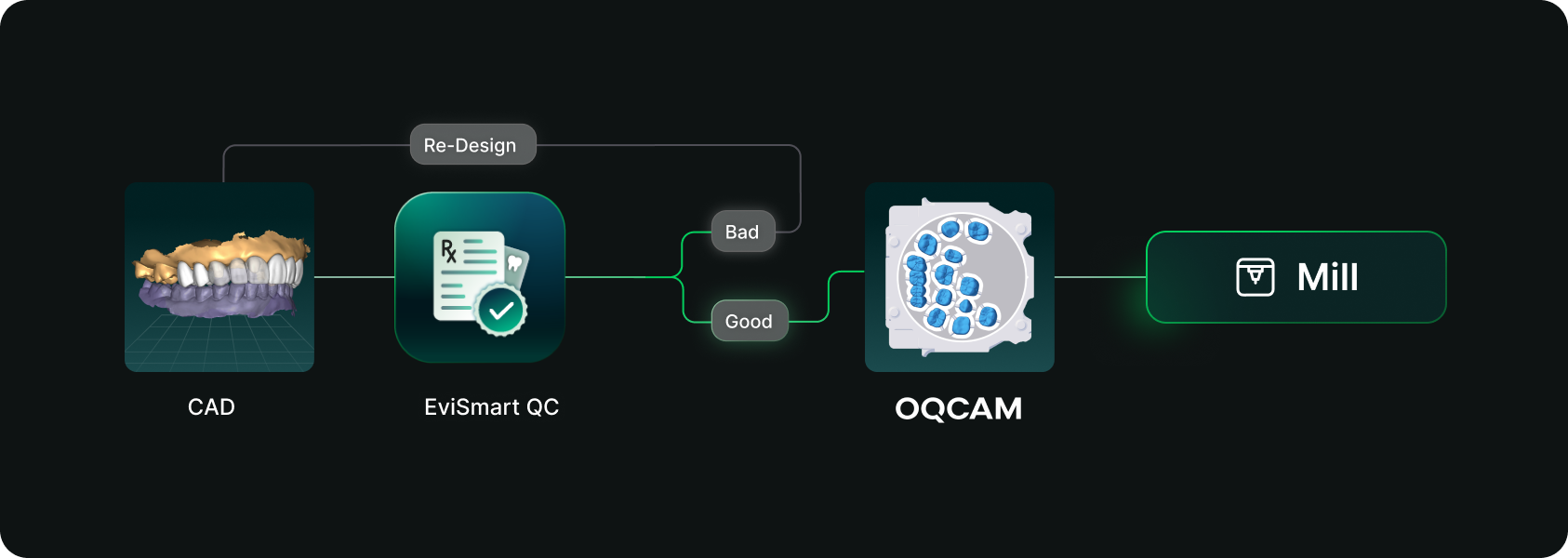
Designs you order from EviSmart arrive in your Oqcam already formatted. Named the way your nesting rules expect, with shade and material attached, and pointed at the machine that case belongs on.
The routing is decided per case. An implant case sends the crown to the mill and puck you cut implant crowns on, and the model to the printer you print models on. Different case types, different machines, chosen automatically rather than by a tech working through a dropdown for every file.
The trigger is QC approval. EviSmart designs your cases your way. The same team works on all your cases and learns what a good case looks like to you. Once your case passes our QC, it triggers a greenlight to send the design directly into your Oqcam account in under a minute.
Once the file arrives in your Oqcam, all your CAD/CAM technicians can review the nested design before starting the mill. That final QC step does not change and is not meant to.
Setup is one session. We connect your Oqcam account and agree where each of your products should go, using the routes and materials you have already built there. Nothing new to create, and you only revisit it if something changes.
Automatic sending only works if you trust what is being sent. Once a case is nested it gets cut, and a design that was not right is wasted material.
You choose what flows. During setup we map only the case types you want moving on their own. Anything unmapped never sends. It waits for you exactly as it does today.
Most labs start narrow. Bread and butter work first, night guards and posterior single units, then widen once they have watched it run for a few weeks. The lab that has been live longest started exactly there and has added case types since.
Your approval stays. This removes the file shuffling between design and CAM. It does not remove your eyes from the build.
For labs outsourcing design work the math gets compelling somewhere north of 30 cases a day into nesting, because that is where the handoff stops being an annoyance and starts being a role.
Not touchless design. Touchless handoff. Every step in that chain that requires judgment should keep requiring judgment, and every step that never did should stop requiring a person.
Nesting requires judgment. Confirming a build requires judgment. Renaming a file so software can read it does not, and never did. It was a workaround that quietly became somebody's job.
Nobody pays you to rename files.


