
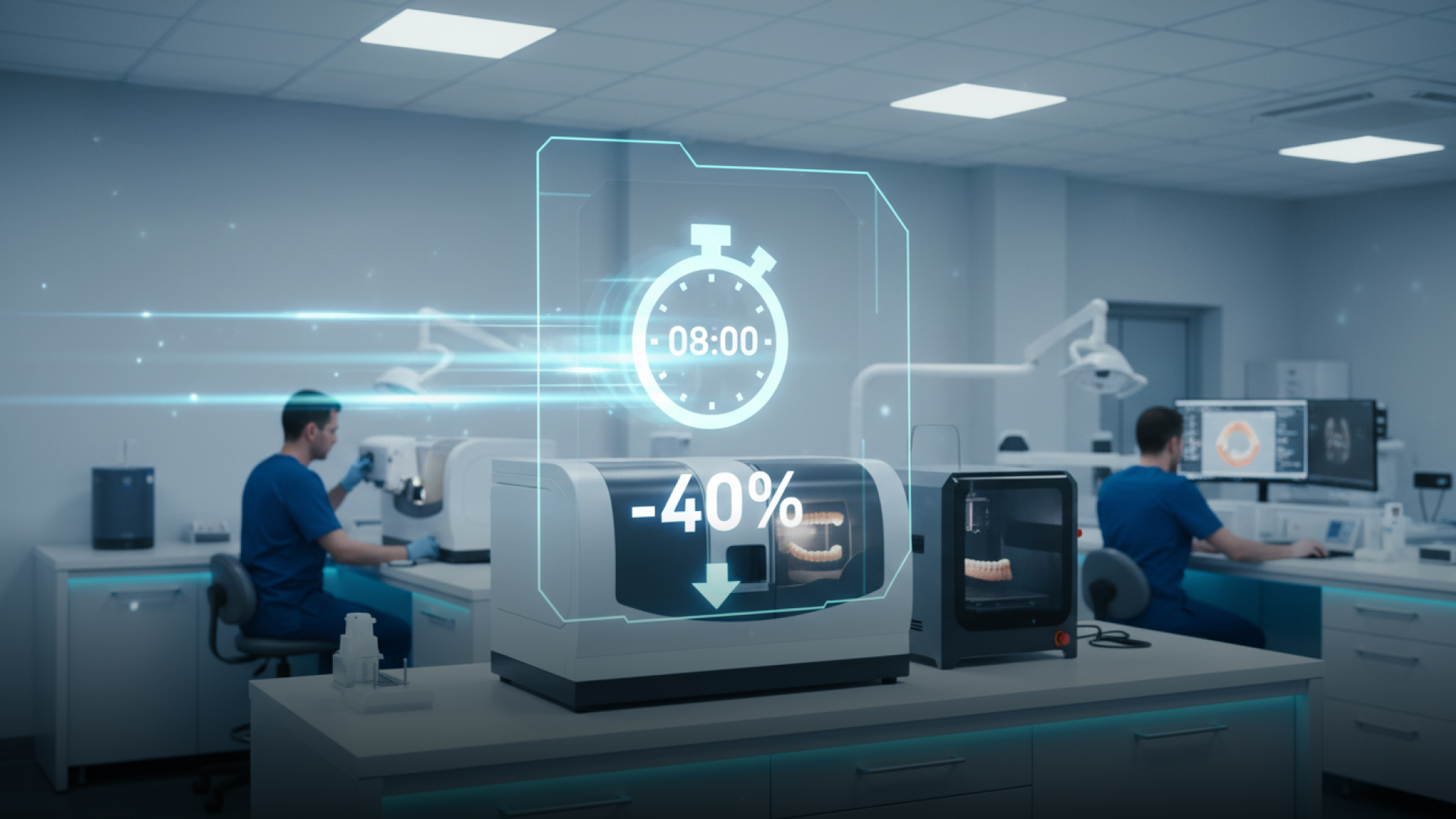
Labs that cut turnaround time from 1 week to 48 hours aren’t doing it with more technicians.
They’re doing it by removing friction, tightening workflow, and replacing slow manual steps with predictable, automated ones.
This guide breaks down the six root causes of slow turnaround time and what high-performing labs are doing to fix them.
A week used to be fine.
Today, it feels slow.
The issue isn’t skill. It’s workflow speed between steps.
Cases sit idle:
They automate early steps so cases enter production fast and complete.
Outcome:
Labs that automate case intake often cut turnaround time from 1 week → 48 hours, without adding headcount.
Some days are overwhelming.
Other days are slow.
This unpredictability makes turnaround time inconsistent.
Most labs learn about volume after it hits the team.
They surface volume in real time.
Tools like Downloader and QC:
Outcome:
One lab improved EBITDA margin by 8% by stabilizing workflow rhythm alone.
If you see cases sitting on desks or waiting in trays:
That’s fragmentation.
This creates hours of invisible waste.
They make intake predictable:
Outcome:
Predictable intake = predictable turnaround time.
Labs juggle:
When data is scattered, you get:
They connect their data and communication into one flow:
Everything the team needs is in a single place.
Outcome:
A $20M+ lab improved EBITDA from 22% → 30%+ after fixing data flow.
The talent pool is shrinking. Training takes time.
Even strong teams get capped by:
They remove low-value tasks from technicians’ plates.
When repetitive steps are automated:
Outcome:
Labs using automation unlock 20–30% more capacity without new staff and gain 6–10% EBITDA margin.
Dentists send digital cases instantly.
But downstream steps are often slow:
This mismatch creates friction and delays.
They smooth the handoff between digital inputs and production:
Small improvements in the first 10 minutes of a case save hours later.
Outcome:
One lab cut TRT from 7 days → 48 hours simply by improving digital intake.
Across every lab that moves consistently in 48 hours, three things stand out:
Cases arrive clean, complete, and ready.
No hunting for files. No guessing. No scattered data.
Critical steps happen automatically and immediately.
These labs aren’t working harder.
They’re removing friction from the system.
If you want:
The first place to look is your workflow, not your team size.
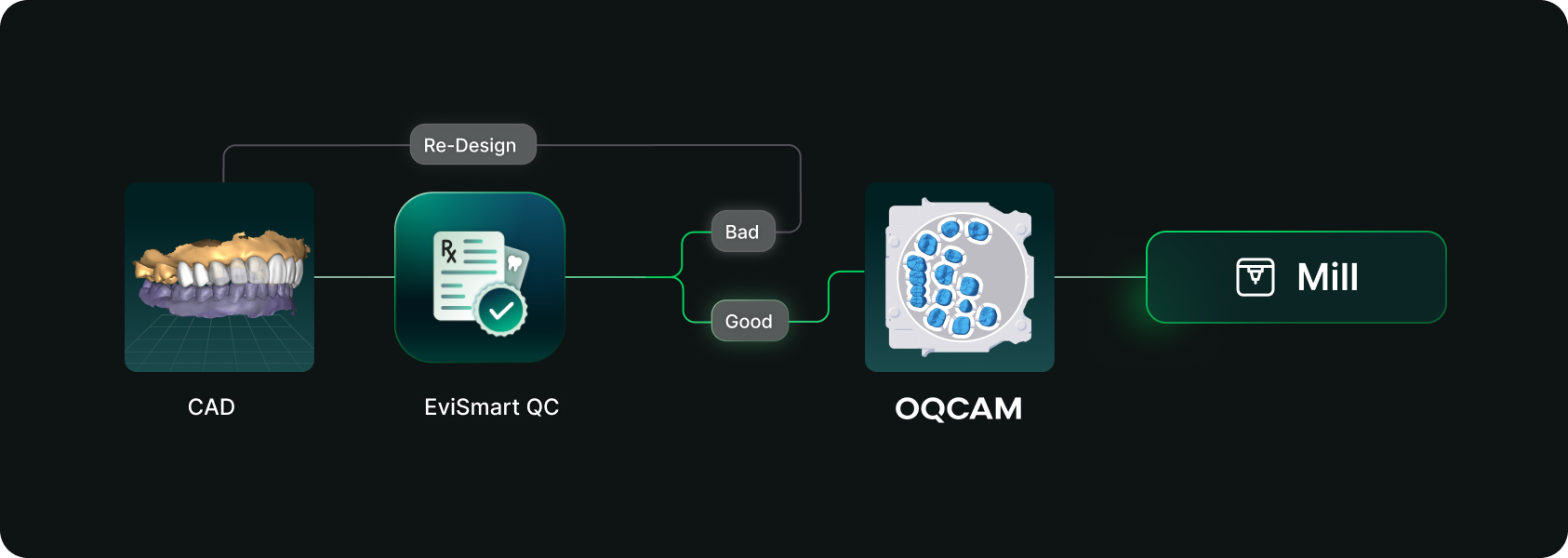
Designs you order from EviSmart arrive in your Oqcam already formatted. Named the way your nesting rules expect, with shade and material attached, and pointed at the machine that case belongs on.
The routing is decided per case. An implant case sends the crown to the mill and puck you cut implant crowns on, and the model to the printer you print models on. Different case types, different machines, chosen automatically rather than by a tech working through a dropdown for every file.
The trigger is QC approval. EviSmart designs your cases your way. The same team works on all your cases and learns what a good case looks like to you. Once your case passes our QC, it triggers a greenlight to send the design directly into your Oqcam account in under a minute.
Once the file arrives in your Oqcam, all your CAD/CAM technicians can review the nested design before starting the mill. That final QC step does not change and is not meant to.
Setup is one session. We connect your Oqcam account and agree where each of your products should go, using the routes and materials you have already built there. Nothing new to create, and you only revisit it if something changes.
Automatic sending only works if you trust what is being sent. Once a case is nested it gets cut, and a design that was not right is wasted material.
You choose what flows. During setup we map only the case types you want moving on their own. Anything unmapped never sends. It waits for you exactly as it does today.
Most labs start narrow. Bread and butter work first, night guards and posterior single units, then widen once they have watched it run for a few weeks. The lab that has been live longest started exactly there and has added case types since.
Your approval stays. This removes the file shuffling between design and CAM. It does not remove your eyes from the build.
For labs outsourcing design work the math gets compelling somewhere north of 30 cases a day into nesting, because that is where the handoff stops being an annoyance and starts being a role.
Not touchless design. Touchless handoff. Every step in that chain that requires judgment should keep requiring judgment, and every step that never did should stop requiring a person.
Nesting requires judgment. Confirming a build requires judgment. Renaming a file so software can read it does not, and never did. It was a workaround that quietly became somebody's job.
Nobody pays you to rename files.




